

Sensors and Measurement Technology in the First Quarter of 2026: Double-Digit Revenue Growth Amid Strategic PFAS Preparations
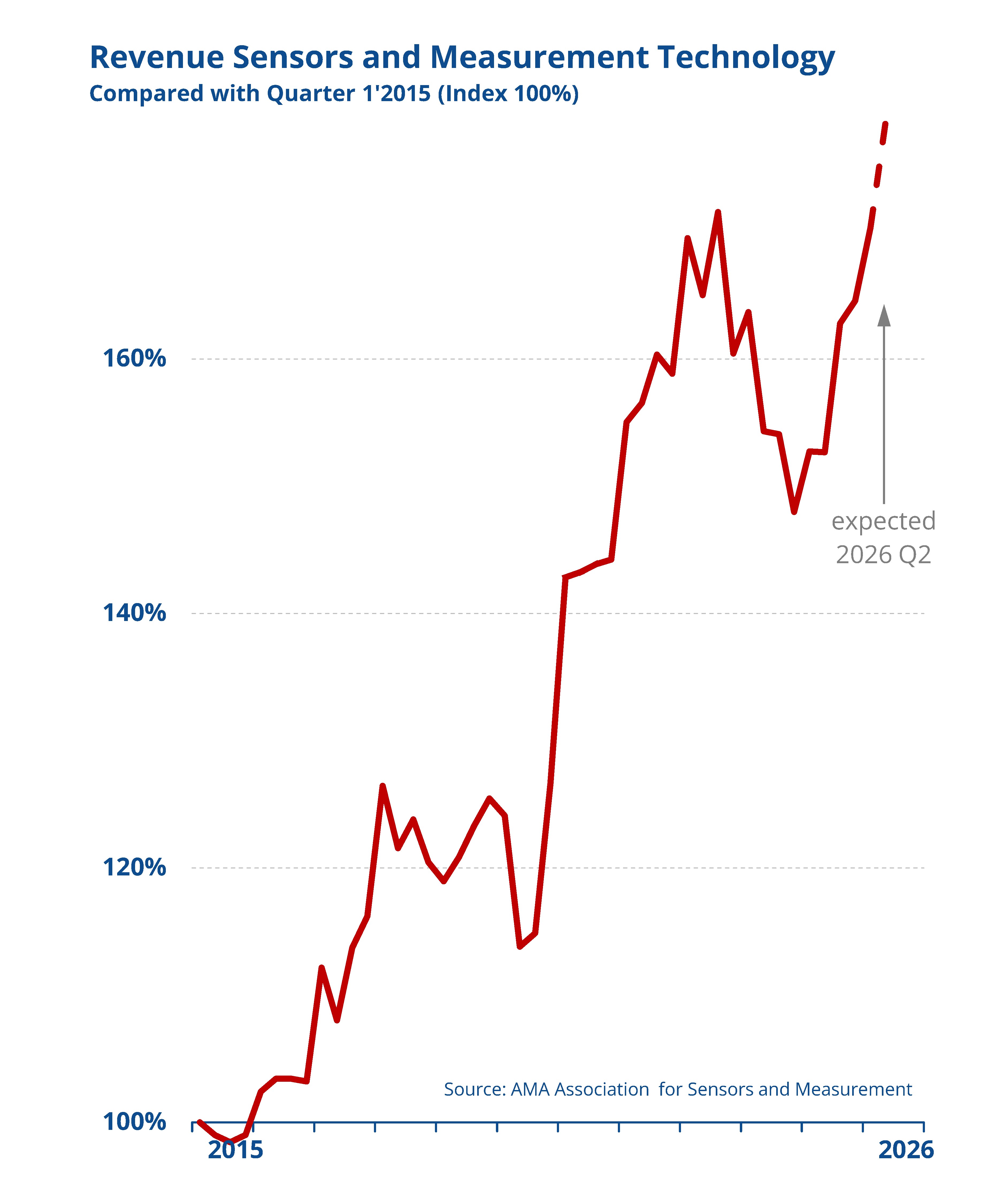
The AMA Association for Sensor and Measurement Technology surveys its approximately 450 members quarterly on economic developments. The latest survey for the first quarter of 2026 reveals robust industry momentum alongside active engagement with future regulatory issues.
Revenue and Expectations
In Q1 2026, the sensor and measurement technology industry recorded revenue growth of 3% compared to the previous quarter. Year-over-year (compared to Q1 2025), industry revenue rose by 12%. The growth rate is thus below the long-term average of 6%, which in the past was also driven by individual high-growth segments.
For the coming quarter, the surveyed companies expect further revenue growth of 5%.
Order Intake and Book-to-Bill Ratio
Order intake developed particularly positively at the start of the year, increasing by 16% compared to the previous quarter. This results in a book-to-bill ratio of 1.16 for AMA members. This figure (orders received relative to revenue) is an important indicator of future business performance and signals strong demand for sensor and measurement technology solutions.
Employment Situation
The positive industry trend is reflected in stable employment figures. Only 5% of AMA members reported using short-time work. This points to a solid economic situation within the industry—despite ongoing global uncertainties and shifts in traditional end-user markets.
PFAS Regulation: Industry Takes Early Action
The regulation of per- and polyfluoroalkyl substances (PFAS) remains a key strategic issue. The survey shows that the majority of companies are already actively addressing the potential impacts:
39% are in the initial analysis phase
20% are planning concrete measures
24% have begun implementation or have already largely adapted their processes
4% have not yet addressed PFAS
This makes PFAS regulation a strategically relevant issue for the sensor and measurement technology industry. Companies are actively working to adapt products and processes to potential regulatory requirements and to ensure long-term planning certainty.
“The results for the first quarter show that the sensor and measurement technology industry is growing while actively addressing key future challenges,” says Philipp Gutmann, Managing Director of the AMA Association. “The positive momentum in new orders underscores our industry’s innovative strength. At the same time, our companies are addressing regulatory issues such as PFAS early on and strategically. As the AMA Association, we actively support our members in this effort.”
Sensor and Measurement Technology Industry Holds Its Ground in a Challenging Market Environment
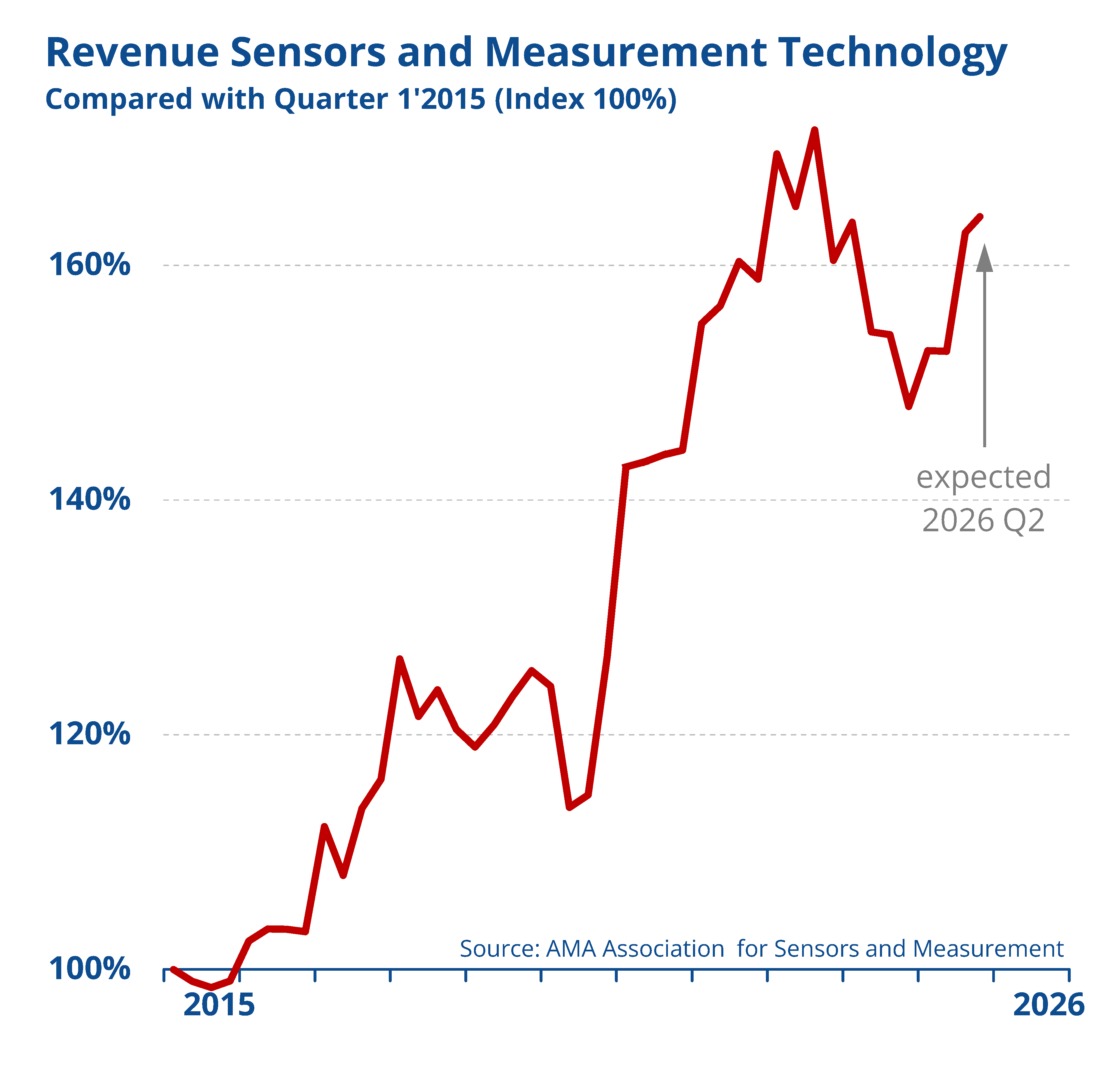
The sensor and measurement technology industry started 2026 on a generally positive note. This is shown by the latest business survey conducted by the AMA Association among its approximately 450 member companies. Compared to the first quarter of 2025, industry revenue rose by 12 percent. For the second quarter, companies expect further revenue growth of five percent.
Order intake also developed positively in the first quarter, rising by 16 percent compared to the previous quarter. With a book-to-bill ratio of 1.16, the industry continues to see solid demand for sensor and measurement technology solutions. The employment situation also remains stable: Only five percent of the companies surveyed reported currently utilizing short-time work.
Despite a generally challenging economic environment, companies continue to invest in their future viability. A key issue in this context is the regulation of per- and polyfluoroalkyl substances (PFAS). The survey shows that the majority of companies are already actively addressing the potential impacts. Many are in the analysis or planning phase, while others have already initiated concrete measures to adapt their products and processes.
“The results for the first quarter show that the sensor and measurement technology industry is growing while actively addressing key future challenges,” says Philipp Gutmann, Managing Director of the AMA Association. “The positive momentum in order intake underscores our industry’s innovative strength. At the same time, our companies are addressing regulatory issues such as PFAS early on and strategically. As the AMA Association, we actively support our members in this effort.”
Focus on Stability and Sustainability
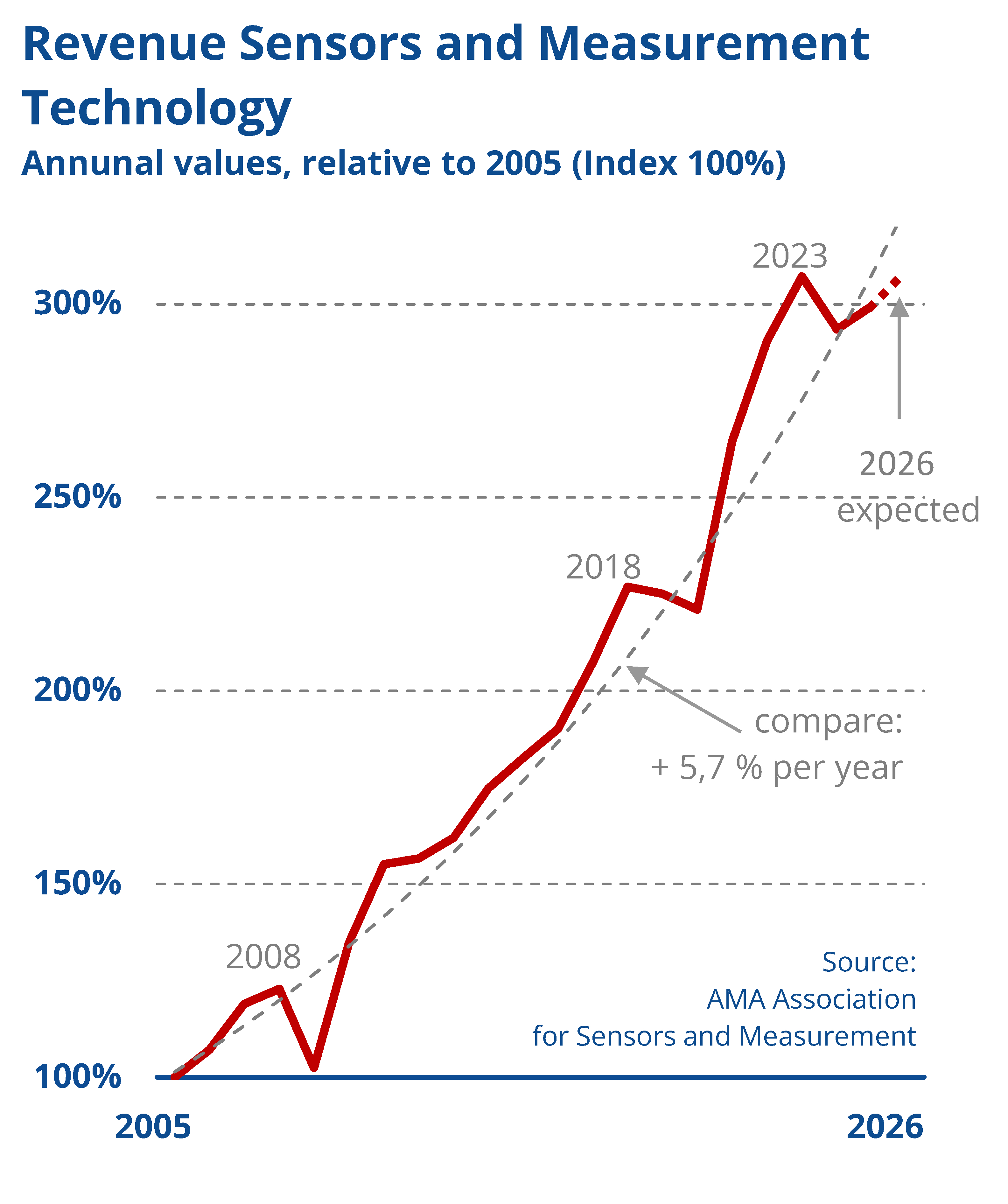
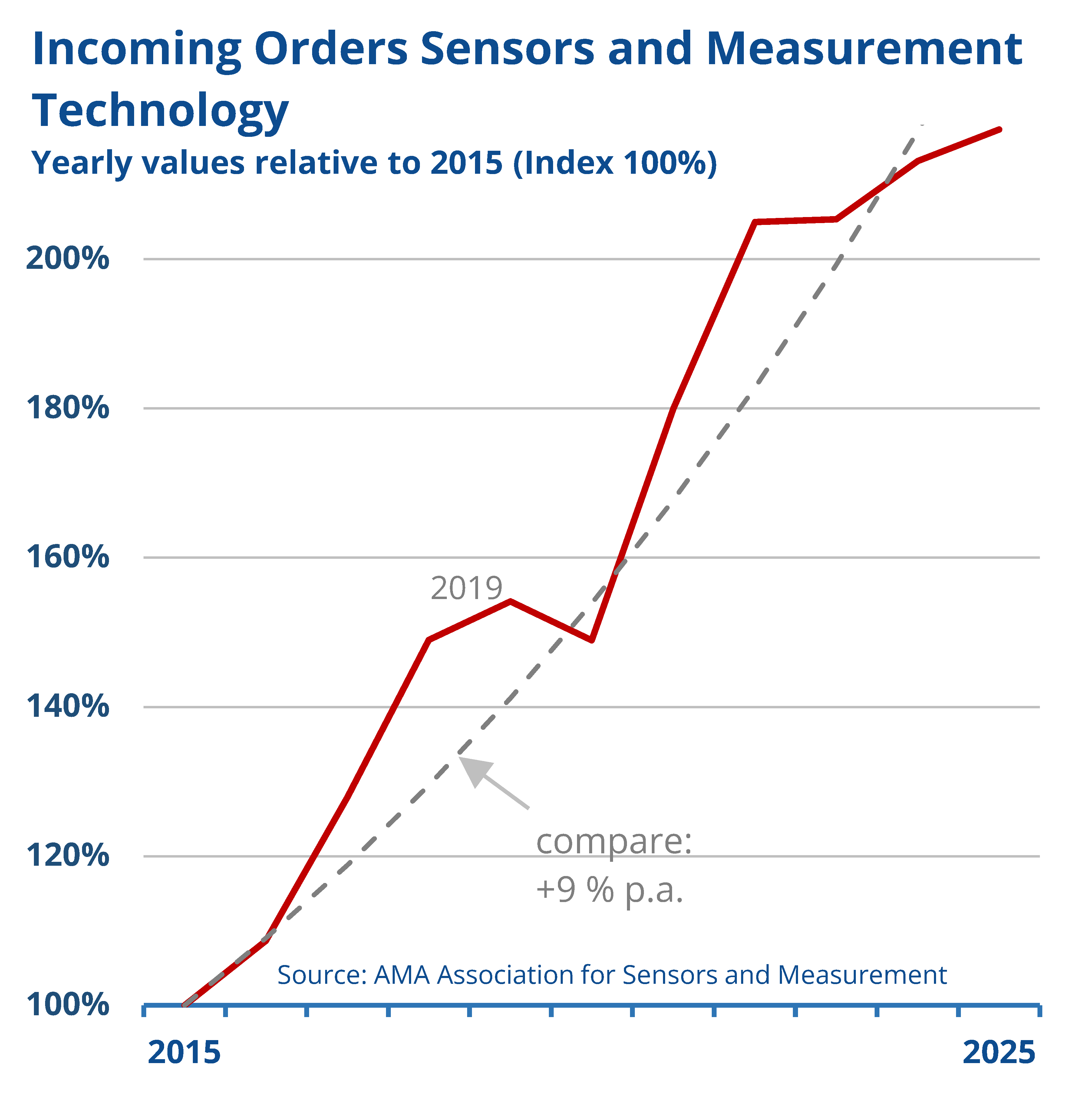
The sensor and measurement technology industry stabilized slightly in 2025 and showed a moderate upward trend by the end of the year. According to a recent survey by the AMA Association, revenue in the fourth quarter of 2025 rose by 1 percent compared to the previous quarter and was 11 percent higher than in the same quarter of the previous year. Order intake also showed a slight positive trend, rising by 2 percent. With a book-to-bill ratio of 0.96, overall demand remains subdued but shows a stable trend. Short-time work played hardly any role in the fourth quarter, indicating a robust employment situation.
The industry’s export ratio stood at 50 percent in 2025. Europe remains a key sales market with a 31 percent share. At the same time, many companies are increasingly focusing on securing existing markets and expanding international partnerships.
India is gaining importance in terms of international expansion. Against the backdrop of potential trade agreements between the EU and India, 48 percent of the surveyed companies plan to expand their existing activities there. Another 19 percent are considering entering the market or intensifying their involvement. At the same time, around a quarter currently see no concrete need for action. Overall, it is evident that the Indian market is increasingly coming into focus, but investment decisions depend heavily on regulatory and trade policy conditions.
Another key issue is preparation for the EU’s Cyber Resilience Act. Here, the picture is mixed: 31 percent of companies already feel well prepared, while one-third are still in the planning phase and another third have not yet implemented any concrete measures. This illustrates that while the relevance of regulatory requirements is recognized, practical implementation is often still in its early stages.
The industry is cautiously optimistic about the year 2026. The focus is on securing economic stability, strengthening innovation capacity, and gradually expanding cyber resilience to meet growing technological and regulatory requirements.


